Eight mobile games, measured before they are recommended
TapProbe is a small independent desk. We install a game on a clean handset, play it for two sittings, and write down what actually happens: how long it takes to reach the first round, how the advertising behaves, and what still works with the phone offline.
Currently on the bench — 8 titles from Google Play
08titles in the current log
30 minminimum hands-on per title
05criteria behind every bench score
02sittings before an entry is published
01 / Method
Four passes before a game reaches the catalogue
The protocol is deliberately boring. It is the same for a children's puzzle and a coach simulator, and it is written down so a reader can tell how a bench score was reached.
01
Clean install
The title goes onto a stock Android handset with a fresh profile, no carried-over settings and store defaults left alone. Download size and the first launch are noted as they happen.
02
First sitting, thirty minutes
Half an hour of ordinary play, logged as we go: time to the first real round, what the tutorial assumes a player already knows, and the point where a newcomer stalls.
03
Advertising and prompts
We record where advertising appears, how long a break runs, and how often the game asks for a rating, a sign-in or a system permission. Anything that interrupts a round is written down.
04
Second sitting, 48 hours later
We come back cold. Whatever only shows up on day two — daily gates, energy timers, repeat prompts — lands in the notes, and the bench score is set afterwards.
02 / Catalogue
The current log, one entry per test
Star figures are the public Google Play ratings recorded at our last check. The bench score out of ten is ours, and the two are kept apart on purpose. Every title below has been through both sittings of the method.
01
Bike racing / stunt courses
Moto X3M Bike Race Game
Ace Viral
First play
35 s
Sitting
2–5 min
Offline
Yes
Bench score
8.6 / 10
A side-on stunt rider that started life in browsers and now runs natively on Android. Every level is a short obstacle course of ramps, loops and moving parts, timed to the hundredth of a second, with an instant restart after a slip. Stages are compact enough for a two-minute break, and the difficulty curve stays fair for a long stretch.
Restart sits on a single tap, so a failed run takes seconds to try again.
Advertising breaks sit between levels rather than inside a run.
An intercity coach simulator set on Indian highways: pick a bus, take a route, and work through stops, indicators and passenger pick-ups. Camera options include a cockpit view with working mirrors, and the traffic is calm enough to keep the pace unhurried. It suits players who prefer slow, deliberate driving to lap times.
Steering can be swapped between tilt, buttons and an on-screen wheel.
Routes are long — this one rewards a sitting, not a queue.
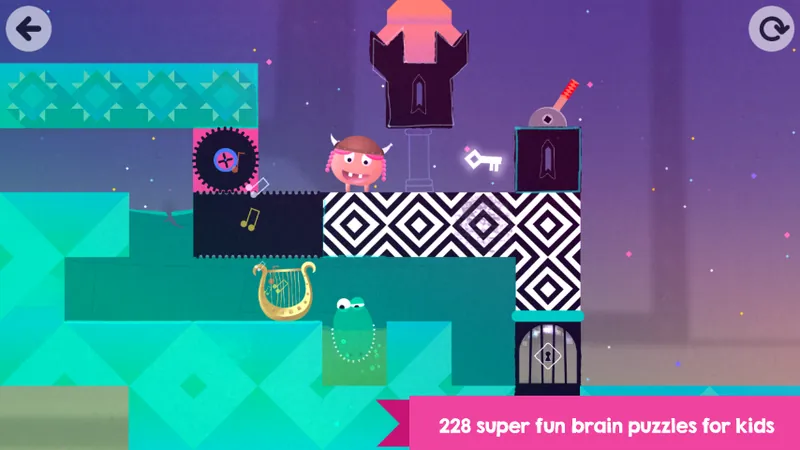
A physics puzzler for younger players that sends rolling characters through castle chambers. Each room introduces a single idea — ramps, levers, hidden passages, floating platforms — then leaves the child to experiment instead of narrating the answer. Two difficulty tracks cover early and later primary years.
No timers and no failure screens; a room can be retried indefinitely.
Reading is not required — the rules are shown rather than written.
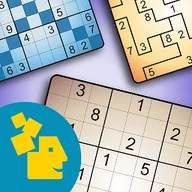
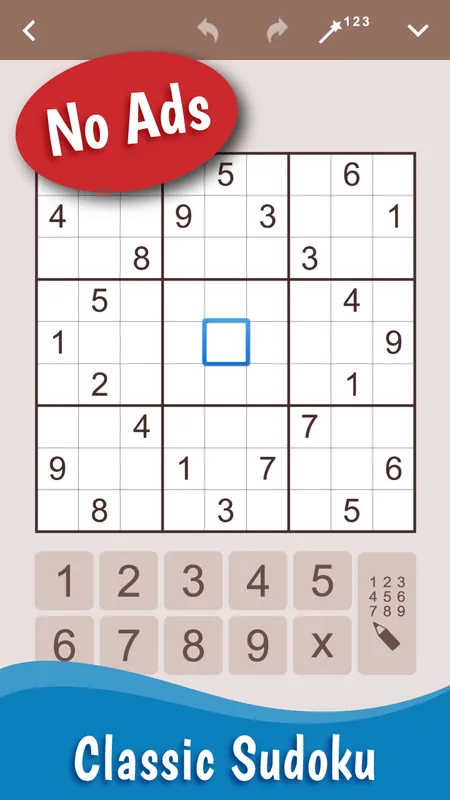
Conceptis supplies hand-checked puzzles to newspapers, and the app inherits that discipline: each grid has one solution and can be reached by logic alone. Beyond the classic nine-by-nine there are diagonal, irregular and multi-grid variants, with pencil marks, an undo history and optional error checking. Difficulty runs from a gentle warm-up to a long evening.
The highest bench score in the current log — quiet interface, no interruptions mid-grid.
Everything stays playable with the handset in flight mode.
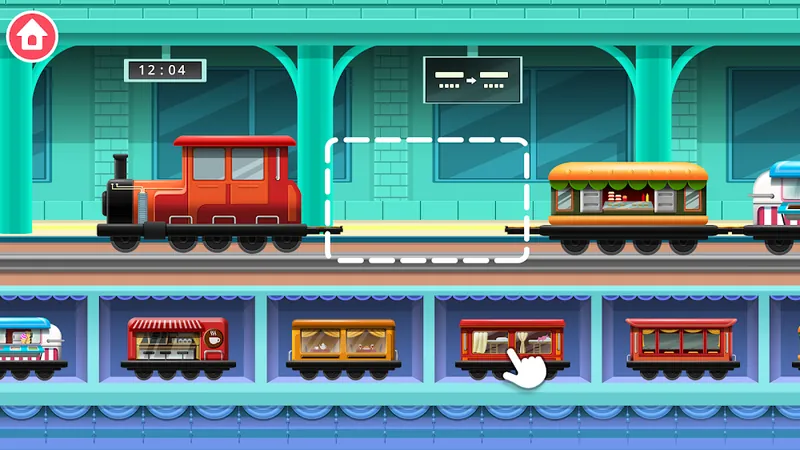
A gentle construction toy: children assemble a locomotive and its carriages from loose parts, then drive the finished train past stations, tunnels and level crossings. There is no timer and no failure state — the loop is build, decorate, drive, repeat. Large touch targets and spoken prompts make it usable before reading age.
Every screen can be left through one clearly marked home control.
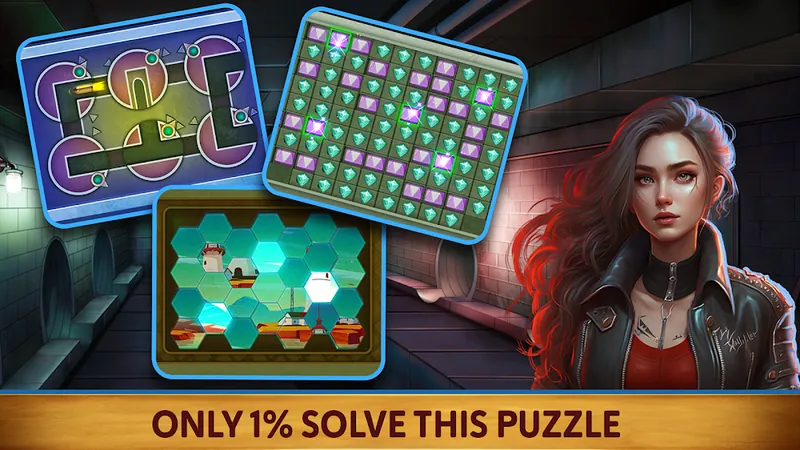
A room-escape adventure told in chapters: search the scene, collect what is loose, and solve the small logic puzzles that open the next door. Puzzle types rotate — pipe routing, tile sorting, sliders, hidden objects — so progress rarely stalls on a single mechanic. Hints are there when a chapter runs long.
Scenes stay readable on a small screen; pinch zoom is supported.
Hints are optional and never pushed into the middle of a puzzle.
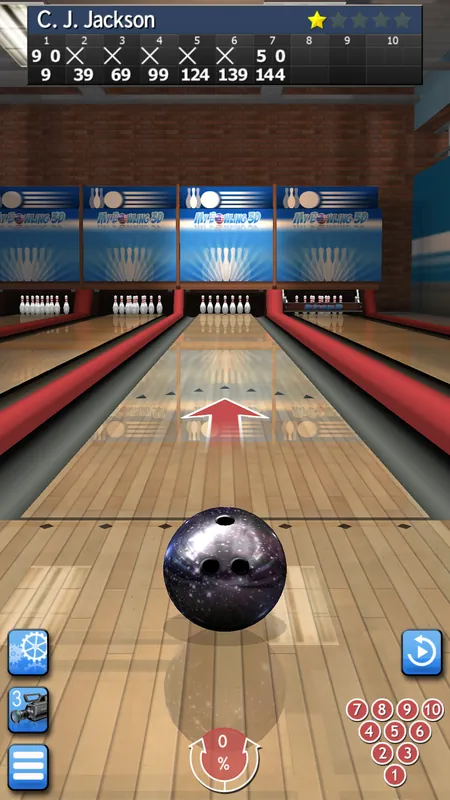
A straightforward ten-pin bowling sim with swipe aiming, spin control and physics that reward a considered line over a fast flick. Modes cover solo practice, pass-and-play on one handset and online matches, with a spread of alleys and balls unlocked through play. A frame takes a minute or two, which suits short sittings.
Aim, hook and speed all sit on one screen — no menu digging between throws.
Real-time mini golf: four players putt the same hole at once and the first ball in the cup closes it. Courses are short and cartoon-styled, a match runs about two minutes, and the character roster brings different putting quirks. It leans on a steady connection, so a Wi-Fi network is the better setting.
Matches are short enough to finish cleanly on a commute.
Needs a live connection — there is no solo practice in flight mode.
Five criteria, fixed weights, the same sheet for every title. We publish the weights so a reader can disagree with us in an informed way.
Bench sheet — weights applied to every entry in the catalogue
Criterion
Weight
What we measure
Onboarding
20%
Time from install to the first real round, and how much of that stretch cannot be skipped.
Session fit
20%
Whether a sitting can start and stop cleanly at the length the game implies, without losing progress.
Ad load
25%
How often advertising appears, how long a break runs, and whether it lands inside a round or between rounds.
Offline behaviour
15%
What still works with the handset in flight mode, and how gracefully the game handles a dropped connection.
Controls & access
20%
Touch target size, text legibility, sound and haptics options, and whether input can be reconfigured.
The weighted total is published out of ten. A score is only set after the second sitting, and it is revised — up or down — whenever a title is re-tested. Google Play star figures shown in the catalogue are quoted as found and are never blended into the bench score.
04 / Log
Recent entries and re-tests
Every change to the catalogue is dated. If a score moves, the reason sits in this list.
2026-08-04
Sudoku: Classic & Variations
Bench score moved to 9.1 after the variant grids were re-checked across two sittings.
Re-tested
2026-07-28
Golf Blitz
Added to the catalogue after live matches on both mobile data and a home network.
New entry
2026-07-19
Bus Masters: India Simulator
Note added on the three steering options after a reader asked about tilt controls.
Note
2026-07-06
Escape Room: Mystical Tales
Added to the catalogue; chapter three was replayed to confirm the hint pacing.
New entry
2026-06-22
Moto X3M Bike Race Game
Advertising note rewritten after an update changed where breaks appear.
Note
05 / Players
What players say on Google Play
Public reviews left on the Google Play listings of titles in the current log, quoted as published and with the reviewer's own wording left as written.
“I used to play this game online when I was younger (On Cool math games). This brings back so many happy childhood memories and is definitely just as fun as it was back then!”
SSSelene Sanchez Google Play review · Moto X3M Bike Race Game
“Great game and I loved the ending how I could help in multiple portals. Keep up the hard work!”
AMAng Moulton Google Play review · Escape Room: Mystical Tales
“This game is so fun and fascinating. I recommend playing this game everyday and rating it 5 stars.”
EBEric Brandt Google Play review · Sudoku: Classic & Variations
06 / Alerts
Get a note when the log changes
One short message when a title is added, re-tested or corrected. Nothing else.
What you are signing up to
Alerts are delivered through browser notifications and e-mail. Your browser will ask for notification permission after you submit the form — you can refuse it and still receive e-mail, and you can stop either at any time. Details of what we store and for how long are set out in the privacy notice.
Thank you — your address has been recorded. If you allowed notifications, the next log update will arrive in your browser as well.
07 / Questions
Common questions about the log
In batches rather than on a schedule: a title joins the catalogue when both sittings are done, and an existing entry is revisited when an update changes what we described. Every addition, re-test and correction is dated in the log section above, and the alert form exists only to tell you when the next one lands.
The desk does, after the two sittings described in the method. Some links to Google Play are advertising placements, and where that is the case the entry says so; a placement is arranged only once the entry is written, and it cannot move a bench score or edit a test note. The full statement is in the terms.
The stars and, where Google Play shows one, the rating count next to each capture are Play figures, copied at the date of our last check and refreshed when a title is re-tested. Our own judgement is the bench score out of ten, which is calculated from the weights published in the scoring section.
How often advertising interrupts ordinary play, how long a break runs, and whether it lands in the middle of a round or waits for the end of one. It carries the heaviest single weight on the bench sheet, 25 per cent, because on a normal handset it is the part of a session a player notices most.
We look for calm, self-contained games from smaller studios that a reader can try in a short sitting. Genres are kept varied on purpose, so the log is not eight versions of the same puzzle. Reader suggestions are read, and they join the queue in the same way as anything else.
Browser notifications can be switched off in your browser's site settings for this domain. E-mail alerts carry an unsubscribe link in every message, and you can also write to the desk and ask us to delete your address.
08 / Genres
How the current log is spread
Six shelves across eight titles. The mix is deliberate: a catalogue of near-identical puzzles would tell a reader very little.
Racing and stunts
Short timed courses with instant restarts. Best measured by how quickly a failed run can be tried again.
Entry 01
Vehicle simulation
Long routes, cockpit views and control schemes that need checking on a real handset rather than in a trailer.
Entries 02, 05
Children's logic
Rules shown rather than written, no timers, and an exit control a small child can find without help.
Entries 03, 05
Number puzzles
Grids that must be solvable by logic alone. Interface quiet enough to hold a train of thought.
Entry 04
Escape and hidden object
Chaptered searching and small logic gates. Judged on hint pacing and how readable a scene stays on a phone.
Entry 06
Sports
Aiming, spin and physics. The useful question is whether one round fits the gap a player actually has.
Entries 07, 08
09 / The desk
Who writes this log
TapProbe is a small independent desk in Australia. It exists because store listings are written by the studios behind the games, and a screenshot cannot tell you how a title behaves forty minutes in, on an ordinary handset, with notifications switched on.
No arrangement of any kind moves a bench score, and we do not run promotional entries dressed up as tests. Where a link is a placement it is labelled inside the entry itself, not buried in a footer. If a note turns out to be wrong, it is corrected and the change is dated in the log above.
Questions, corrections and suggestions are read by a person. Write to the desk at probe@tapprobe.com.
10 / Editorial model
How this site works, and what keeps it honest
This is who picks the titles, who plays them, who writes the entries and how often the log is revised. The line that separates a test note from an advertising placement is part of that, so here it is in plain terms.
Titles are picked by the desk from public Google Play listings, with an eye on genre variety and on studios a reader may not have met before. Nobody outside the desk adds a title to the queue, and no studio is told in advance that a test is under way.
Testing happens first, writing second. The same person installs the game, plays both sittings and writes the entry, and the bench score is set from the published weights only after that second sitting. Where a link to Google Play is an advertising placement it is labelled as one inside the entry, and a placement is arranged only after the entry is written; if an advertiser is unhappy with a note, the note stands.
Bench scores are the desk's opinion rather than a measurement anyone else is obliged to share, and the log is revised whenever a title is re-tested or a note turns out to be wrong. The advertising disclosure, the position on trade marks and the limits of what these notes are worth as advice are set out in the terms of use.
Hands on every titleNothing is listed from a store description. Each entry comes from at least two sittings on a real Android handset.
Play ratings quoted, not adjustedStar figures are Google Play's own, copied at the date of the check and refreshed on re-test.
Advertising kept separatePlacements never move a bench score, and a promotional link carries a label inside the entry.
Corrections in the openA wrong note is fixed and the change is dated in the log, rather than edited away quietly.
This site uses necessary cookies to work, and optional cookies for audience measurement and advertising. You can accept or decline the optional ones; the choice is stored on your device. See the cookie notice for the full list.